TY Coding Module Ideas: 8 Projects Students Actually Finish (2026/27)
Eight practical Transition Year coding and digital skills module ideas for 2026/27, with the time, tools and outcome each one needs.
A good TY coding module gives every student a finished, working thing by the end — not a folder of disconnected exercises. The eight ideas below are ordered roughly by how visible and shareable the finished outcome is, since that’s what keeps TY students motivated through a module with no state exam attached.
What makes a good TY coding module?
A strong TY coding module has three things: a clear finished artefact, a realistic timeframe (most run 6–10 weeks), and no requirement for the coordinator to be a coding specialist. Modules that rely entirely on the teacher’s own programming knowledge are harder to sustain year to year than ones built around structured, self-directed materials.
8 TY coding module ideas for 2026/27
| Module | Tool | Typical length | Outcome |
|---|---|---|---|
| Build a 2D video game | GameMaker | 8–10 weeks | A playable, finished game |
| Interactive story or animation | Scratch | 4–6 weeks | A shareable interactive project |
| Personal website | HTML/CSS | 6–8 weeks | A live personal or portfolio site |
| Wearable tech project | micro:bit | 4–6 weeks | A working physical device |
| No-code app prototype | Figma/Glide | 3–5 weeks | A clickable app prototype |
| Python basics and automation | Python | 6–8 weeks | A small working script or tool |
| Code-triggered stop-motion animation | Scratch + camera | 3–4 weeks | A short animated film |
| AI literacy mini-project | Discussion + prompting tools | 2–3 weeks | A presented ethics/use-case project |
1. Build a 2D video game (GameMaker). The most visibly tangible outcome of any module on this list — students finish with something they can actually play, show friends, and put in a portfolio. Works well as an 8–10 week module since it naturally breaks into stages (mechanics, enemies, scoring, a finished level).
2. Interactive story or animation (Scratch). Low barrier to entry, good for mixed-ability groups, finishes with a shareable project on the Scratch community site.
3. Personal website (HTML/CSS). Direct, practical skill-building; many students have never built anything that lives on the real internet.
4. Wearable tech project (micro:bit). Combines code with a physical object — strong engagement for students who find pure screen-based coding less motivating.
5. No-code app prototype (Figma or Glide). Good fit for students more interested in design and product thinking than syntax.
6. Python basics and automation. Suits TY groups heading toward Leaving Cert Computer Science, since it introduces real text-based programming.
7. Code-triggered stop-motion animation. A creative-technology crossover module, good for a shorter block (3–4 weeks) or a co-taught slot with art or media.
8. AI literacy mini-project. Shortest module on this list, works well as a 2–3 week add-on covering prompting, bias and ethics rather than building something.
How long should a TY coding module run?
Most TY coding modules run 6 to 10 weeks, matching the standard TY rotation block. Shorter 2–4 week modules work for simpler or discussion-led topics like AI literacy; longer 8–10 week modules suit anything that builds toward one finished, substantial artefact, like a game or a website.
Does a TY coding module need a coordinator with coding experience?
No. Self-directed or structured modules — where students work through material independently with teacher oversight rather than live instruction — don’t require the coordinator to have a programming background. This is how most TY coding providers in Ireland actually operate, and it’s worth confirming with any provider before committing a timetable slot.
Which TY coding module produces the most tangible outcome?
Of the options above, building a complete 2D video game produces the most tangible, shareable result: a finished, playable game rather than a script, a prototype, or a short animation. Code, Create, Play is a self-directed GameMaker module built around exactly this outcome, and is available as a dedicated Transition Year module for 2026/27.
Written by Tomás Brides, a secondary school teacher with 17 years’ classroom experience, including three years delivering Transition Year. He holds postgraduate qualifications in 21st Century Teaching and Learning (Trinity College Dublin) and Universal Design for Learning (UCD), and is a Teaching Council of Ireland registered teacher.
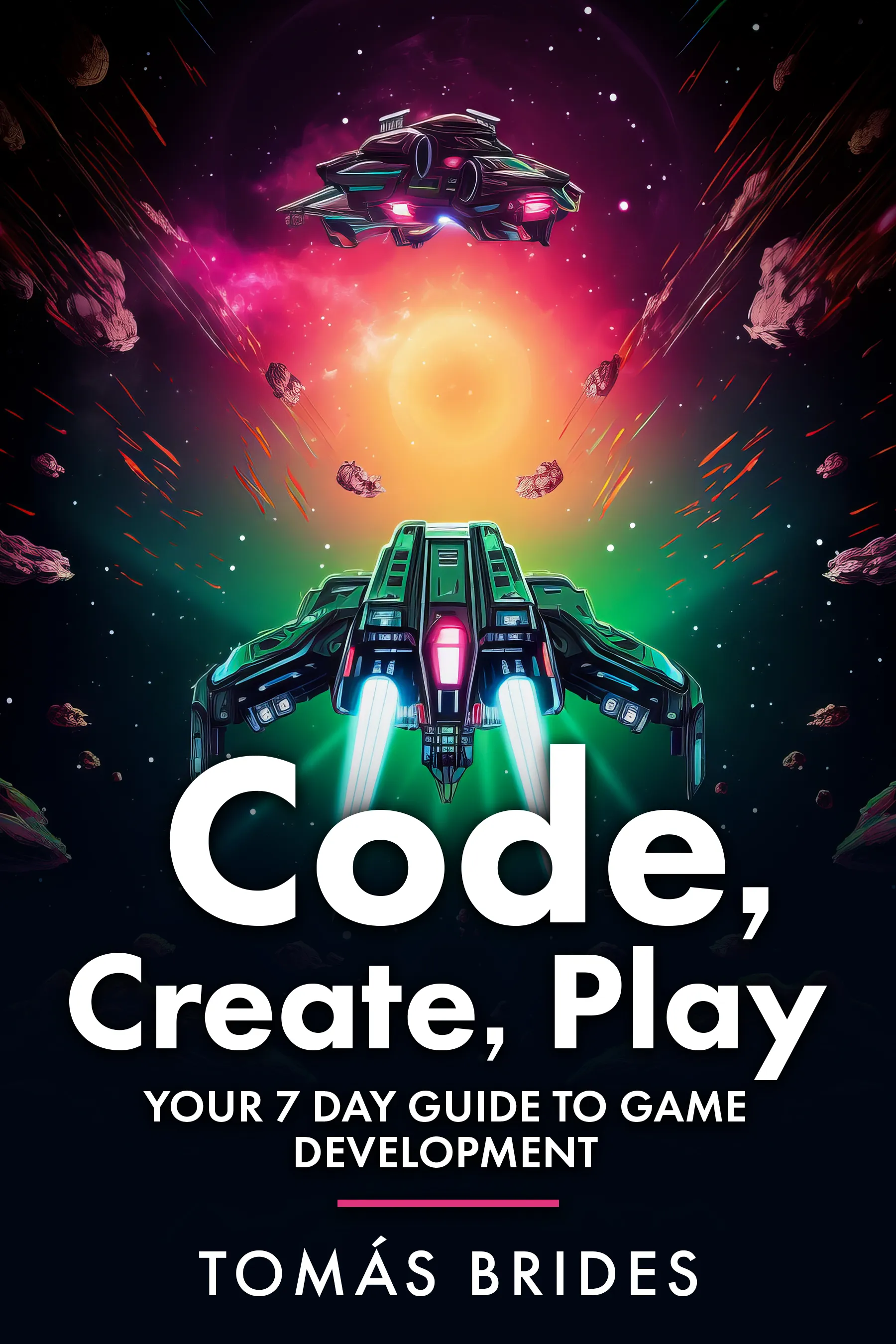
Learning GameMaker?
Code Create Play takes you through building a complete game step by step over seven days.